
Snow Load vs. Heat Shield: Why a Show Low Shed is Built Differently

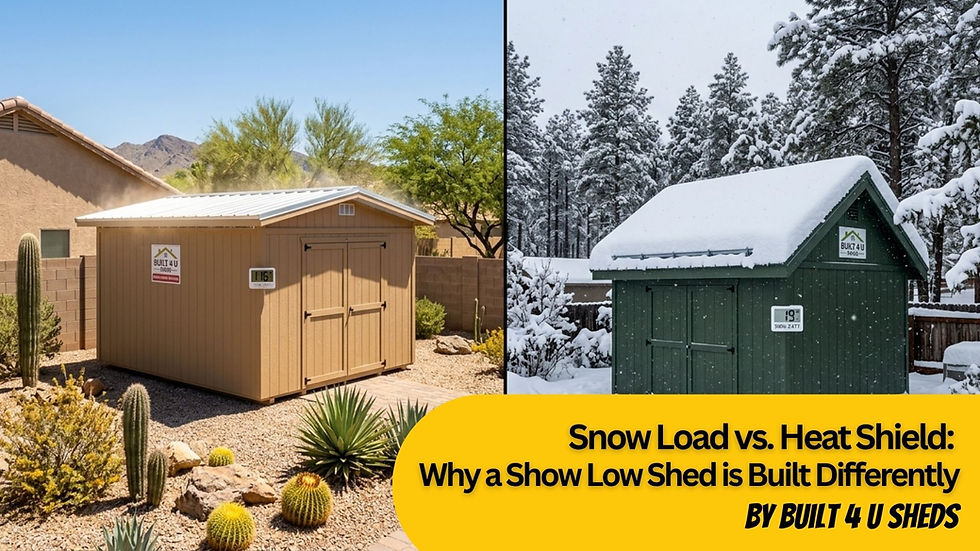
If you've driven from Phoenix up to Show Low in February, you know Arizona is two climates stacked together. At 6,400 feet of elevation, Show Low gets real snow, freezing nights, and winter storms. The Valley is about beating the heat. That's why the snow load vs heat shield conversation matters when you plan a backyard build.
A shed engineered for Mesa will buckle under deep snow. A shed built for Show Low will overheat in Tempe. Materials, roof pitch, ventilation, and fasteners change based on which battle the structure fights.
What Snow Load vs Heat Shield Really Means
Snow load vs heat shield is shorthand for two design philosophies any contractor weighs when sizing up a build site.
Snow load is the weight of snow a roof must handle, measured in pounds per square foot, varying by elevation, snowfall history, and roof slope.
A heat shield is how a structure deflects, vents, and insulates against extreme solar heat through reflectivity, attic airflow, and insulation R-values.
In Show Low, the priority is structural capacity and shedding snow before it can accumulate into a hazard. In the Valley, it's keeping rooftop temperatures down so the interior stays usable.
The 6:12 Roof Pitch: Why Slope Wins Against Snow
The biggest difference between a Show Low shed and a Valley shed is the roof. We recommend a minimum 6:12 roof pitch — the roof rises 6 inches for every 12 horizontal inches.
A 6:12 pitch encourages snow to slide off (if the roof is metal) rather than sit and compact on the roof. It also helps prevent snow drifts from forming in roof valleys. Flat roofs and low-slope designs might look modern, but they're a liability when snow piles up with nowhere to go.
How a Roof's Snow Capacity Is Calculated
A contractor must evaluate several variables for roof structures in snow country:
Ground snow load for the zip code (Show Low typically falls in the 30–50 psf range, sometimes seeing 3 feet of base snowpack)
Roof slope and exposure to wind
Expected snow drifting patterns and where the drift will deposit
Whether the shed has a heat source inside, which causes snow to melt faster and can trigger icing
The roof snow load number directly determines rafter size, sheathing thickness, and fastener pattern.
Ice Dams, Icing, and the Eave Problem
Even with great slope, snow and ice cause trouble at the eave. Ice dams form when warm air escapes through the attic, the bottom layer of snow melts, water runs to the cold edge, and then refreezes when it hits cold temperatures. That ice buildup forces meltwater backward under the shingle line. Although this isn’t normally a problem in unheated sheds, it can definitely cause issues in tiny homes, shed offices and the like that are heated.
Three things stop the cycle:
Insulation in the ceiling that keeps heat from the roof deck
Ventilation in the attic that keeps the underside of the deck cold
Heat cable at the eave and gutter line to keep a drain path open
Installing this system with proper insulation stops the refreeze cycle before it lifts shingles. For deep snow events, homeowners may need to remove snow with a roof rake.
The Desert Heat Shield: Why Ventilation Rules in the Valley
Drop down to Mesa, Gilbert, or Tempe and the snow load vs heat shield equation flips. The roof isn't fighting snow accumulation — it's fighting 115°F days that push attic temperatures past 150°F.
The desert design relies on:
Radiant barrier sheathing that reflects solar gain
Continuous ridge and soffit ventilation that pulls hot air out of the attic
Lighter-colored roofing that absorbs less heat
Higher R-value insulation in the ceiling
In the desert, energy efficiency is a roof story. If you're running power to your Arizona backyard shed for an office, cooling load depends on the ventilation system. Metal roofs work in both climates for opposite reasons — they shed snow easily in Show Low and reflect heat in the Valley.
Material and Build Differences Side by Side
Here's how the snow load vs heat shield split shows up in the build:
Component | Show Low (Snow Country) | The Valley (Desert) |
Rafters | 2x8 or 2x10 to withstand excessive snow load | 2x6 is often enough |
Sheathing | 5/8" minimum | 1/2" works fine |
Fasteners | Tighter nailing patterns and hurricane ties for snow country | Standard patterns |
Roof Pitch | 6:12 minimum | 3:12 to 4:12 common |
Overhangs | Shorter to reduce drift loading | Longer for shade |
Wet snow can weigh three times as much as dry powder, which is why snow loads on a roof during a warm storm in Show Low are often more dangerous than during a cold one. New England builders deal with the same problem, and Arizona mountain code borrows those standards. Depth of the snow matters less than density.
Common Show Low Build Mistakes
Even experienced homeowners get tripped up:
Picking a flat or low-slope design because it looks cleaner, which lets snow accumulate dangerously
Skipping the cable at the eave to save a few hundred dollars
Forgetting where snow will deposit when it slides — an avalanche off a metal roof can destroy what's parked beside the shed
Ignoring uneven loading from drifting snow on the lee side
Assuming the manufacturer warranty covers snow damage — most don't unless rated for that load
Snow Removal and Winter Maintenance
A durable shed still needs help during the winter months, especially after heavy snowfall. Use a roof rake (never a shovel up on the rooftop) to clear lower eaves after storms drop a heavy amount of snow. Clear the gutter and drip edge if icing forms. Check the cable system before storms.
For year-round value, our guides on maximizing every square foot of a small shed and monsoon-proofing your Phoenix-area shed cover seasonal prep that applies whether you're in the high country or the Valley.
Bottom line: snow load vs heat shield isn't just jargon. Getting it right separates a shed that lasts 25 years from one that fails in five.
Need a Shed Built for Your Arizona Climate Zone?
Whether you're building in Show Low's snow country or down in Valley heat, Built 4 U Sheds designs and constructs custom backyard sheds engineered for Arizona's full climate range, with service areas in Glendale, Surprise, and Goodyear. Our durable structures use weather-resistant materials and snow-rated framing techniques that stand up to deep snow, monsoon rains, and triple-digit summers.
Why Choose Built 4 U Sheds for Your Backyard Shed?
When you invest in a build from Built 4 U Sheds, you're getting a structure designed to minimize maintenance and maximize longevity. Working with us includes:
Site-specific consultation that accounts for your elevation, snow load zone, and heat exposure
Custom design development using premium materials matched to your climate
Expert craftsmanship covering roof pitch, ventilation, drainage, and ice-dam prevention
Complete project management from permits through delivery and installation
Helpful Tip: Our Shed Configurator Tool lets you design your shed by selecting dimensions, roof pitch, materials, and features while getting real-time pricing.


